



Macro Report August 2024

Internacional
Nos EUA, julho ficou marcado pelo fechamento da curva de juros e pelo início da temporada de balanços, que foi parcialmente ofuscada pelo aumento do ceticismo sobre os investimentos em inteligência artificial.
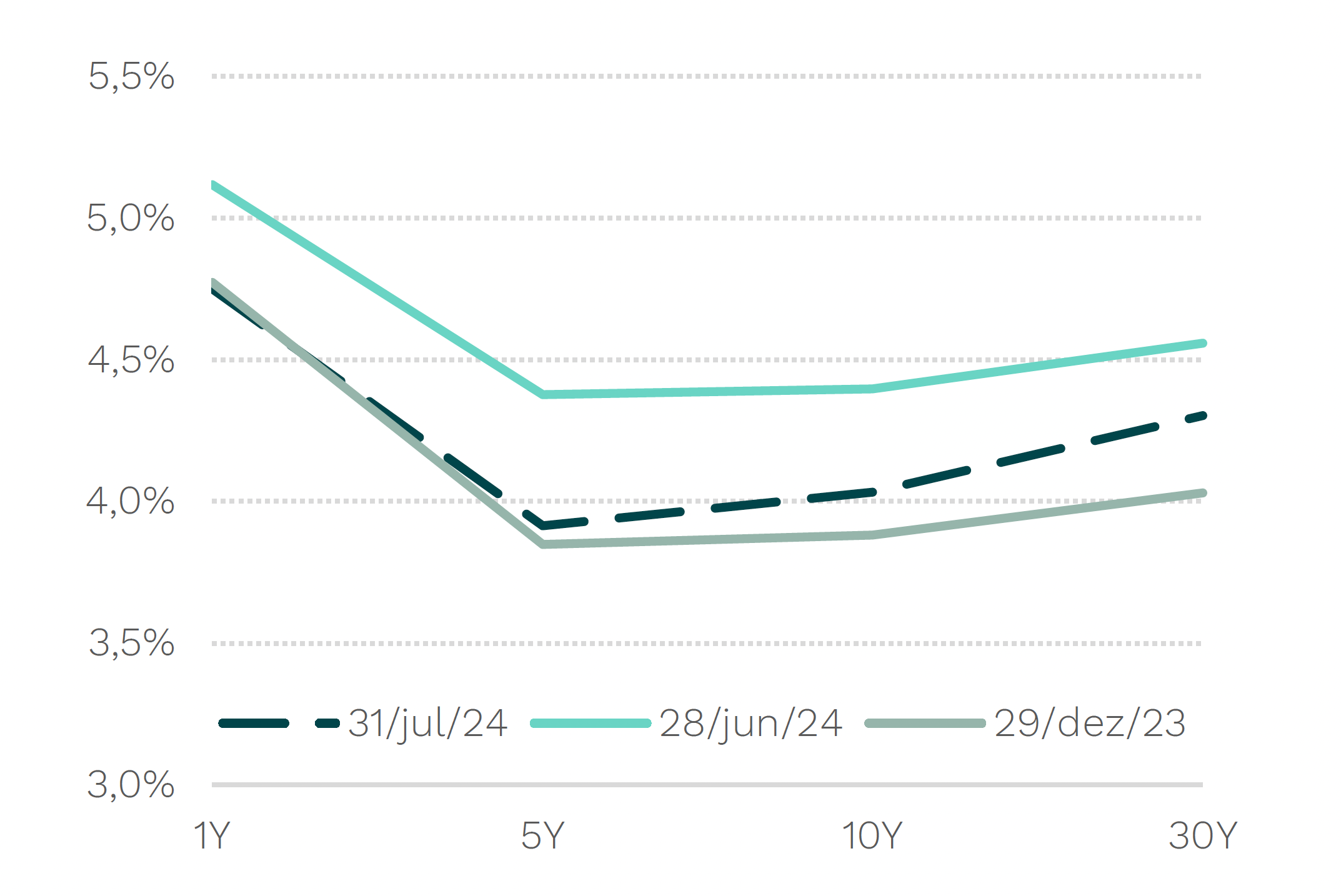
Já no início de agosto, dados mais fracos de manufatura e de payroll geraram temores de recessão. Contudo, a baixa taxa de desemprego, níveis decrescentes de default e dados robustos de PIB apontam para uma economia americana ainda saudável.
Diante deste cenário, cresce a pressão para que o FOMC inicie cortes em setembro. Em julho, o comitê manteve as taxas entre 5,25% e 5,50%, reconhecendo o processo de desinflação recente. Os mercados já esperam um corte de 0,5% na próxima reunião, seguido de dois cortes de 0,25%.
Na Zona do Euro, o BCE manteve os juros em 3,75%, ainda de olho na inflação de serviços, setor que por sua vez impulsionou o PIB da região (0,3%). Contudo, a Alemanha, principal economia do bloco, recuou 0,1% devido à retração na indústria. Na China também houve divulgação de PIB, que avançou 4,7% no segundo trimestre, abaixo das expectativas. O resultado foi puxado por dados mais fracos de consumo e do setor imobiliário. Após preocupações com a demanda doméstica e a pressão deflacionária, o PBoC cortou a taxa básica em 0,10%. Os efeitos dessa medida devem ser brandos, ainda assim.
No Japão, a taxa de juros foi elevada de 0,1% para 0,25%, fortalecendo o iene. A medida é questionável, pois custos de financiamento mais altos podem afetar ainda mais a atividade econômica, que contraiu no primeiro trimestre.
Brasil
Aqui a questão fiscal continuou trazendo volatilidade para o real, enquanto a bolsa teve mês positivo com o investidor estrangeiro aportando R$ 7 bilhões na B3.
Na divulgação do relatório bimestral de receitas e despesas, o governo revisou as projeções de déficit primário, anunciando um contingenciamento e um bloqueio de despesas de R$ 15 bilhões. Apesar da notícia, o governo já persegue o limite inferior da meta (-0,25%), sem visar ajustes fiscais significativos, já que tem pouca inclinação para controlar despesas, além de enfrentar uma forte reatividade no Congresso para elevar receitas.
O Copom reforçou a importância de uma política fiscal crível para a inflação na ata da reunião de julho, e, em unanimidade, manteve a taxa Selic em 10,5%, indicando mudança de tom sobre a avaliação da economia. O comitê afirma que está pronto para subir juros se necessário. A estratégia do BC é de acompanhar “diligentemente” os condicionantes da inflação, como o câmbio e as expectativas de inflação, sem se comprometer com estratégias futuras.
Disclaimer
Wright Capital Gestão de Recursos Ltda. ("Wright Capital") does not market or distribute investment fund shares or any other financial asset. This material is for informational purposes only and is intended exclusively for its recipient. The information contained herein is strictly confidential and may not be used by anyone other than the intended recipient or disclosed to third parties without the prior written consent of Wright Capital. This material does not constitute an official investment statement for the funds or assets referenced herein, which will be prepared and sent by the fund administrator at the appropriate time, where applicable. In the event of any discrepancy between the information contained in this material and that contained in the monthly statement issued by the fund administrator, the information in such monthly statement shall prevail. Discrepancies may arise due to the adoption of different calculation and presentation methods. Net asset values of investment funds that may be contained in this document are net of expenses (i.e. fees, commissions, and taxes). Fund performance figures disclosed in this document are not net of taxes. Investment funds may use derivative strategies as an integral part of their investment policies. Such strategies, as adopted, may result in significant losses for shareholders, potentially exceeding the invested capital and giving rise to an obligation to contribute additional funds to cover such losses. For performance evaluation purposes, a minimum analysis period of 12 (twelve) months is recommended. Multi-market funds with equity exposure and equity funds may be subject to significant concentration in assets of a limited number of issuers, with the risks arising therefrom. Private credit funds are subject to the risk of substantial loss of net assets in the event of non-payment of portfolio assets, including due to intervention, liquidation, administration, bankruptcy, or judicial or extrajudicial reorganization of the issuers. Certain market index comparisons may have been included for reference purposes only and do not represent a return guarantee by Wright Capital. Past results do not guarantee future performance and are not backed by Wright Capital, any of its affiliates, the administrator, any insurance mechanism, or the Credit Guarantee Fund (FGC). Investors are advised to carefully read fund regulations and prospectuses before investing. Investments involve exposure to risks, including the possibility of total loss of the invested amount. This document does not constitute a legal or any other form of opinion or recommendation by Wright Capital and does not take into account the particular circumstances of any individual. The use of the information contained herein is entirely at the user’s own risk. Before making any investment decision, Wright Capital recommends that the interested party consult their own legal advisor.